


If I knew little about “Paradise Lost” before reading it this past summer, I knew nothing about “Paradise Regained”. I guessed that it would deal with the Second Coming, but I was off by at least two thousand years.


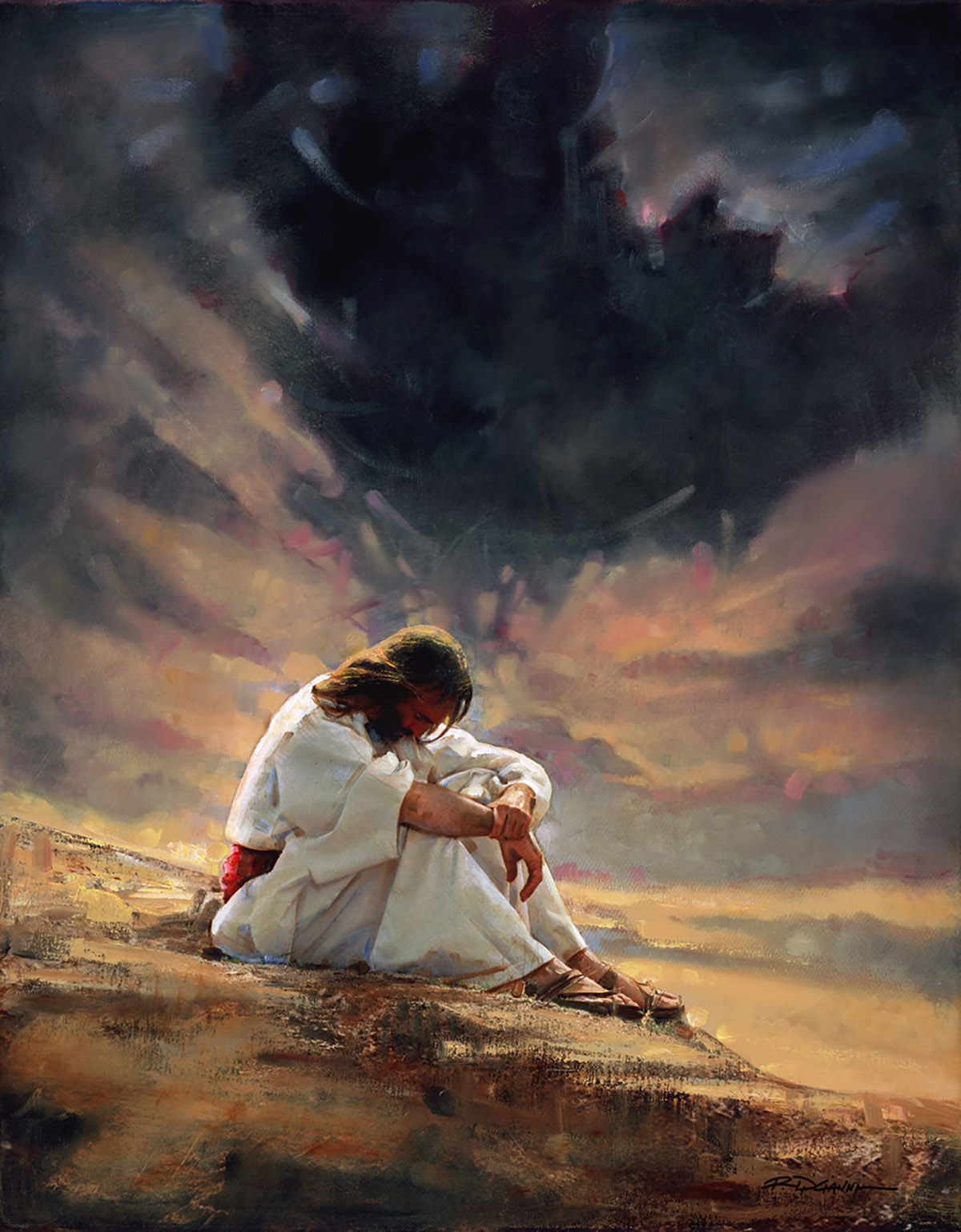
“Paradise Regained” is a short retelling of Jesus’ temptation in the desert. That’s an episode from the Gospels that I’ve been thinking about for months, because it was such a key element in my previous read, “The Brothers Karamazov.” But it’s treated very differently by Milton.
In BK, Jesus is entirely silent before the Grand Inquisitor, who recalls the ancient episode in the desert in order to expound on it. In PR, Christ is formidably vocal in his exchange with the devil. In BK the Temptation seems to have cosmic implications because Satan’s offerings and Jesus’ refusals have consequences for human beings that are easily understood: do we prefer power or persuasion? blind magic or patient faith? Easy bread or difficult freedom? In PR the episode has cosmic import because the Son of God obviously must resist the test, but it’s presented as a duel between two figures only. They are cosmic figures, but still only two; the picture does not widen. Because Jesus overmatches Satan and shows no real wobbling, the victory is certain, the triumph presented as definitive for all time.
Ironically, Milton’s approach makes the episode feel less consequential. The stakes are as high as they are in BK, but in PR the victory is won, period. In BK the stakes are still very much in play, because through the Grand Inquisitor we see that what was won in the desert is being constantly denied and choked by human beings.
PR and BK have two validly contrasting views, but I’m not sure they’re equally successful as drama. In PR our salvation hangs on Jesus’ unquestioned victory over Satan in the desert; in BK it hangs by a thread because we refuse, hide and even deny the freedom we’ve been given.
I enjoyed several things in “Paradise Regained”, and I’ll start with the “small” pleasures: the food that Satan lays out just as Jesus is going hungry (it made me go have dinner!); the first visual description of the city of Rome; the proto-Gothic storm of demonic spirits that falls on Jesus in the night.
It’s always fun when a text directly reminds you of some famous line, movie, or song, and “Paradise Regained” did that for me several times:
soon thou shalt have cause
To wish thou never hadst rejected, thus
Nicely or cautiously, my offered aid,
“I gave you the chance of aiding me willingly, and so saving yourself much trouble and pain” (Saruman, “The Fellowship of the Ring”)
These words by Satan —
Get riches first, get wealth, and treasure heap—
Not difficult, if thou hearken to me.
Riches are mine, fortune is in my hand;
They whom I favour thrive in wealth amain,
While virtue, valour, wisdom, sit in want
reminded me of these words by Father Mapple in “Moby-Dick” —
“In this world, shipmates, sin that pays its way can travel freely, and without a passport; whereas Virtue, if a pauper, is stopped at all frontiers.”
Ch. 9, “The Sermon”
Satan first appears to Jesus in the desert as an old man:
But now an aged man in rural weeds,
Following, as seemed, the quest of some stray eye,
Or withered sticks to gather, which might serve
Against a winter’s day,
So now I’ll think of Milton’s Satan at Christmastime, whenever that wonderful line lands in my ear: “When a poor man came in sight, gath’ring winter fuel.” (“Good King Wenceslas,” 1853)
I liked the sympathetic things in Satan’s character that we see in “Paradise Regained” even in the midst of his lies, like his continued ability to recognize goodness. In his private reflections he describes Christ as having “Perfections absolute, graces divine,/ And amplitude of mind to greatest deeds.”
And there are moments when Satan seems genuinely to grieve that he’s already been cut off forever from God: “This wounds me most (what can it less?) that Man,/ Man fallen, shall be restored, I never more.”
At another point Satan despairs —
All hope is lost
Of my reception into grace; what worse?
For where no hope is left is left no fear.
Eternal damnation, without hope, has made Satan fearless. He has literally nothing to lose.
They say that the Universalist doctrine that all will be saved and that hell is temporary leaves people with no motivation to avoid evil, but I think that is more true of the doctrine of an eternal hell. When you have no hope of being saved, you sink further into sin.
As I said, I like Jesus’ voice in “Paradise Regained,” but occasionally it doesn’t sound right. For one thing, he sounds too often like a 17th century Christian philosopher. But there are other problems.
At one point Jesus tells Satan that he, unlike past sojourners in the desert like the Exodus Israelites, has no material need: “They all had need; I, as thou seest, have none.” But he has already said in his private thoughts that he’s hungry. Even if we understand him as telling Satan that he has no need for food yet, we must assume that in his human form, starvation would eventually kill him as it would any human sojourner in the desert. I don’t, then, understand Jesus’ statement to Satan, as Milton has framed it.
Also, when Satan tempts Jesus to seek glory by cultivating the praise of the people as any great man might do, Jesus refers to the common people as “a miscellaneous rabble” whose undiscriminating praise is worth nothing: “The intelligent among them and the wise / Are few.” He tells Satan that “true glory and renown,” when found in human beings at all, is rather to be found in the single just man, like Job.
Well, Jesus in the Gospels certainly speaks of sheep who need a shepherd, but he also says,
“I thank Thee, O Father, Lord of Heaven and earth, because Thou hast hid these things from the wise and prudent, and hast revealed them unto babes.”
Matthew 11:25
Jesus in the Gospels sides with the common people to the degree that he sides with any human beings, and his attitude toward the single Just Man is very qualified, as when he says,
“Among them that are born of women there hath not risen a greater than John the Baptist: notwithstanding he that is least in the kingdom of heaven is greater than he.”
Matthew 11:11
Or again:
For verily I say unto you, That many prophets and righteous men have desired to see those things which ye see, and have not seen them; and to hear those things which ye hear, and have not heard them.
Matthew 13:17
Milton’s Jesus makes a devastating retort when Satan shows him the nations of the world in all their military splendor:
that cumbersome
Luggage of war there shewn me—argument
Of human weakness rather than of strength.
Great words, true to the Christ of the Gospels.
But Milton depicted a war in Heaven with millions of fighters on each side, and made Heaven itself a walled-in fortress. He depicted Eden as a bubbled paradise, and he had Earth, even before the Fall, continually patrolled by large numbers of armed guards circling the globe.
What do Jesus’ words say about Milton’s vision of Heaven and Hell?