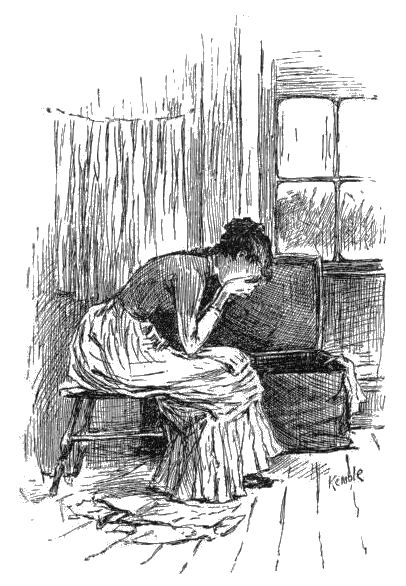
Finishing "Huckleberry Finn," it struck me that there's no romance in the story, not even a steady female character. So in this respect the novel is somewhat similar to “Moby-Dick”, its main historical contender for the “title” of Great American Novel. But Huck doesn't quite go as far as Moby in casting off the ladies. … Continue reading Huck and the ladies
Author: Kevin Rosero
Finishing Huckleberry Finn
September 27, 2021 I’ve finished “Huckleberry Finn,” and I want to go straight to the controversial ending, in which Tom Sawyer reappears. It’s painful to read of all that Jim is subjected to, all because Don Quixote – excuse me, Tom Sawyer – feels the need to stage a dramatic rescue of the kind that … Continue reading Finishing Huckleberry Finn
22 chapters into Huckleberry Finn
September 24, 2021 I’ve read seven more chapters of "Huckleberry Finn," and in that short space we’ve got two very dark episodes: the feuding clans that are rather quickly annihilating themselves, and a near-lynching of a man who has himself committed a cold-blooded murder of a drunk. All of this violence is told in a … Continue reading 22 chapters into Huckleberry Finn
Starting Huckleberry Finn
September 23, 2021 I’ve taken years to read "The Adventure of Huckleberry Finn", because of its darn reputation. The back cover of my 1985 Penguin edition quotes Hemingway’s famous line, “All modern American literature comes from one book by Mark Twain called Huckleberry Finn”. Further down we read that “Of all the contenders for the title … Continue reading Starting Huckleberry Finn
Tom Sawyer
Having read Laura Ingalls Wilder's “Little House” books earlier this year, and now reading “The Adventures of Tom Sawyer” for the first time, it seems to me that Mark Twain produced for boys’ childhood something similar to what Wilder did for girls. Both have produced an idealized but recognizable memory of childhood in a time … Continue reading Tom Sawyer
The Time Machine
My son recently read a kids' edition of H.G. Wells' "The Time Machine," and our house has been busy with this story in various forms. I read the novel some 15 years ago and it remains a favorite. I've also seen both of the major adaptations, from 1960 and 2002, and my son and I … Continue reading The Time Machine
Little Women
The following things about Louisa May Alcott's “Little Women” have surprised me: it’s a very Christian work; it’s ridiculously funny; and tremendously erudite. The movies of “Little Women” that I’ve seen don’t give a sense of the following things: it’s a very Christian work; it’s ridiculously funny; and tremendously erudite. (To be more precise, it’s … Continue reading Little Women
Pilgrim’s Progress
I picked up “Pilgrim’s Progress” only because I was reading “Little Women,” which I found made constant reference to Bunyan’s earlier novel. So I put down Alcott and started “Pilgrim,” and it was a mixed experience – riveting in many places, but often hard-going. As often happens when I pick up a new author, the … Continue reading Pilgrim’s Progress
The Last Picture Show
I knew nothing about this story going in. I thought it was going to be some sober, artsy-fartsy thing. It’s actually filled with sex, much of it surprisingly explicit and even erotic. The sex is painted real, meaning it’s only occasionally a joyful thing and more often: sad, boring, painful, calculating, stolen, paid for, animalistic … Continue reading The Last Picture Show
Hero, meet your villain; or, never mind
It's a common trope in fiction: a final confrontation between the central hero of a story and its central villain. It's an important trope in Westerns, both on the page and screen -- Clint Eastwood's "Unforgiven" is just one famous example. And we see it in works of fiction that are too many to count: … Continue reading Hero, meet your villain; or, never mind